True scale Same orbit. Real proportions.
EarthMoonExplore / Experiment / Understand
A universe
of questions
Interactive experiments. Real physics.
A deeper way to see the world.
One Moon orbit · two reference planes
About this orbit
A little closer to the cosmos.
A Keplerian Moon orbit using mean lunar elements: eccentricity 0.0549, inclination 5.145° and a 27.3217-day period. Earth turns once every 23 h 56 m of simulation time.
- Earth–Moon distance
- 384,400 km
- Orbital speed
- 1.02 km/s
- Elapsed model time
- 0.0 days
The solid white line is the Moon’s only orbit in this model. Optional guides show the ecliptic (blue dashes, Earth’s orbital plane) and Earth’s equatorial plane (amber dots). Their circle sizes are illustrative; neither is another Moon trajectory. Sizes and distance are adjusted for this composition. This simplified model is not a live ephemeris; it omits solar perturbations and orbital precession.
Orbital data · NASA ↗Moon imagery · NASA SVS / LRO ↗Explore Kepler’s laws →Pick something. Pull a thread.
Featured experiments
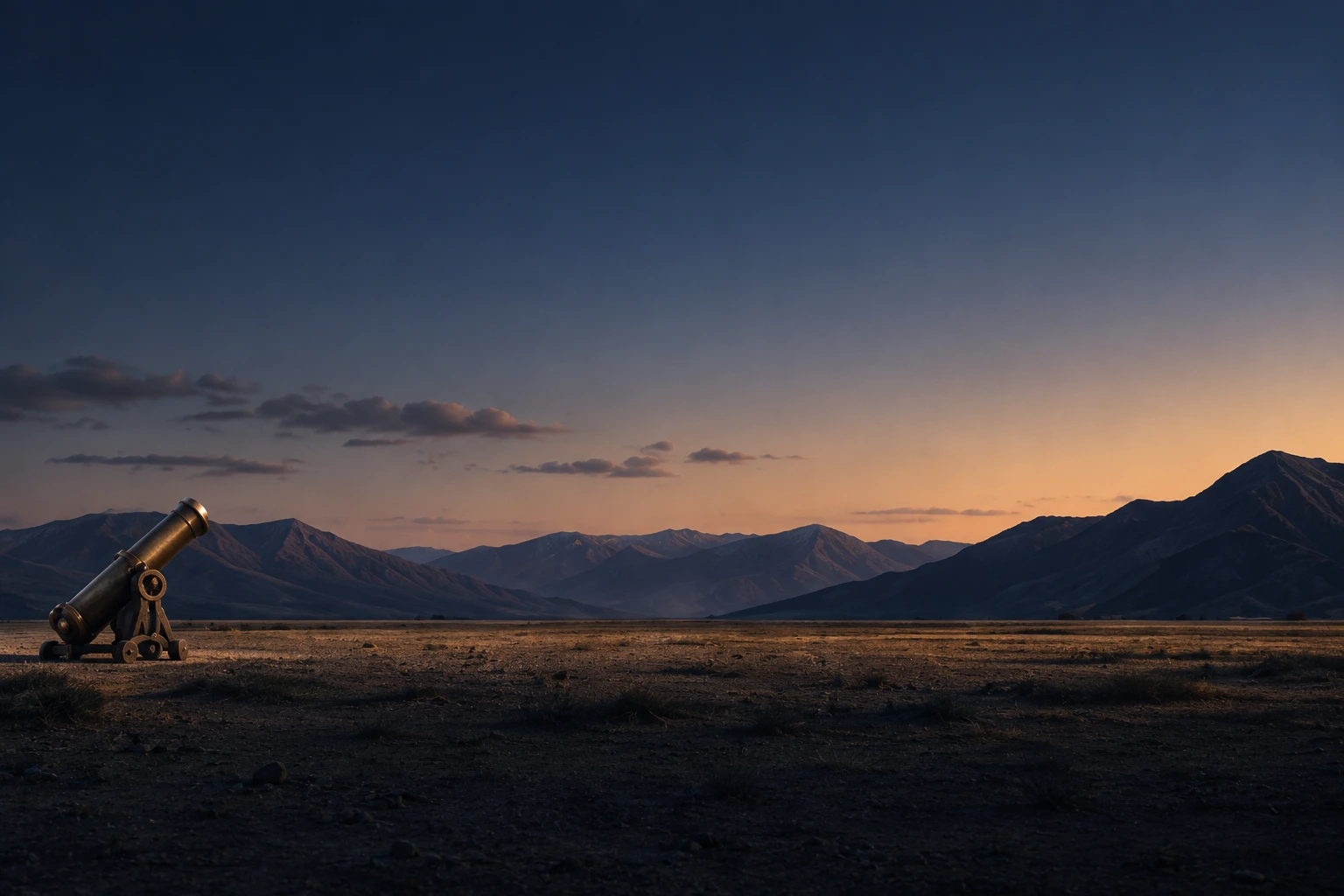 Projectile motionOpen experiment
 Parabolic paths
Change the launch angle, speed and gravity to see how motion unfolds.
Pulse and superposition
Create waves, adjust frequency and amplitude, and explore how they interact.
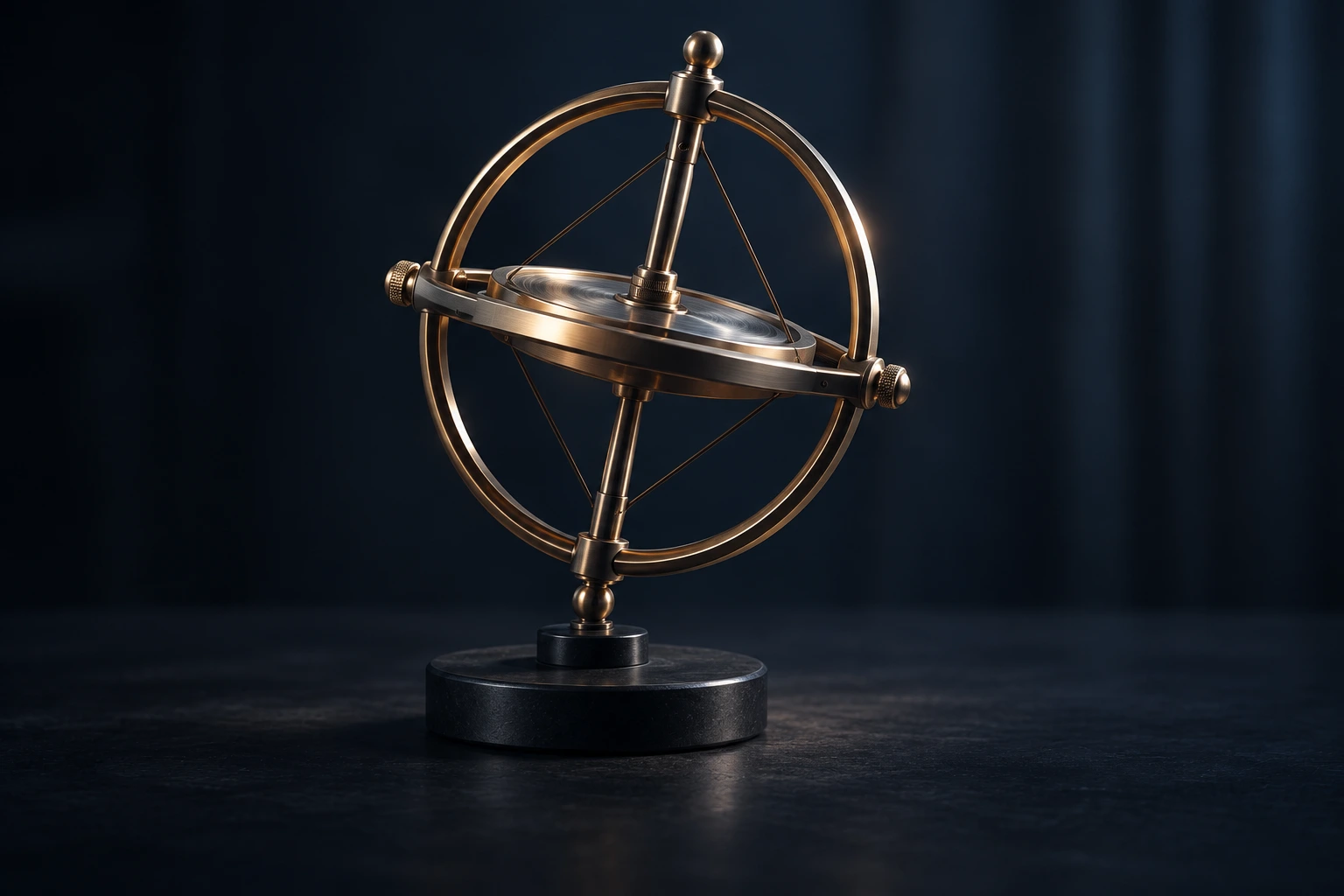 Rotational dynamicsOpen experiment
 The gyroscope
Explore stability, precession and the physics of rotating bodies.
The collection
Every idea opens a door.
92 experiments. 15 branches.
Start wherever your curiosity takes you.
Motion & Forces
Newton’s laws, one body at a time — launched, dragged, tilted, and turned.
02Gravitation & Orbits
One inverse square, from the core of a planet to the edge of an orbit — wells, escapes, and ledgers.
03Rotation
Bodies that spin — rolling races, torque-driven precession, and the skater who conserves what a crash cannot.
04Equilibrium & Fluids
Nothing moves, and that is the whole point — torques, floats, and verdicts.
05Momentum & Energy
What survives a collision, what dies in it, and how to keep the books.
06Oscillations & Waves
Things that repeat and things that propagate — springs, strings, and sirens.
07Optics
Light, drawn with a straightedge — bending at borders, meeting at images.
08Electricity
Charge on the move — what it must conserve, and what that costs you at the tap.
09Modern Physics
One strange postulate, honored to the last decimal — where clocks, rods, and “now” give way.
10Heat & Work
Temperature gets a seat at the ledger — and the ledger gets a ceiling.
11Quanta
Light arrives in packets and atoms keep ladders — the arithmetic that ended the classical century.
12Wave Optics
Interference sharpened into instruments — where the pattern itself does the measuring.
13The Nucleus
The exponential family goes nuclear — counters, chains, and clocks that read backwards.
14Charge & Field
Charged particles steered — the machines that r = mv/qB built.
15Alternating Current
Circuits that answer in phase and amplitude — the phasor wing.
Different experiments. Shared ideas.
Follow a principle.
Find the connections
across the whole collection.
Let one question lead to the next
Take the scenic route.
Guided tours through
some surprisingly connected ideas.
The Conservation Laws, In Four Acts
What survives a crash, a catch, a burn, and a year in orbit — the bookkeeping that never fails.
1234Follow the story Tour 024 experimentsMachines Never Cheat
Four machines, one invoice: force times distance is conserved, and every advantage is re-priced.
1234Follow the story Tour 035 experimentsThe Exponential Family
One differential equation in five costumes — a spring, a dashpot, a capacitor, a coil, and a nucleus.
12345Follow the story Tour 045 experimentsOne Strange Postulate
Light refuses to hurry — and clocks, maps, colors, and mass all give way in order.
12345Follow the story Tour 053 experimentsHeat Into Work
Pressure keeps books, gases pick roads, and Carnot sets the ceiling.
123Follow the story Tour 066 experimentsWhat Light Does
Bending, bouncing, splitting, interfering, and painting the sky — six modules from Snell to the rainbow.
123456Follow the story Tour 074 experimentsThe Quantum Staircase
Energy learns to count: packets, rungs, a ruler for light, and the clock inside the atom.
1234Follow the storyThe collection